
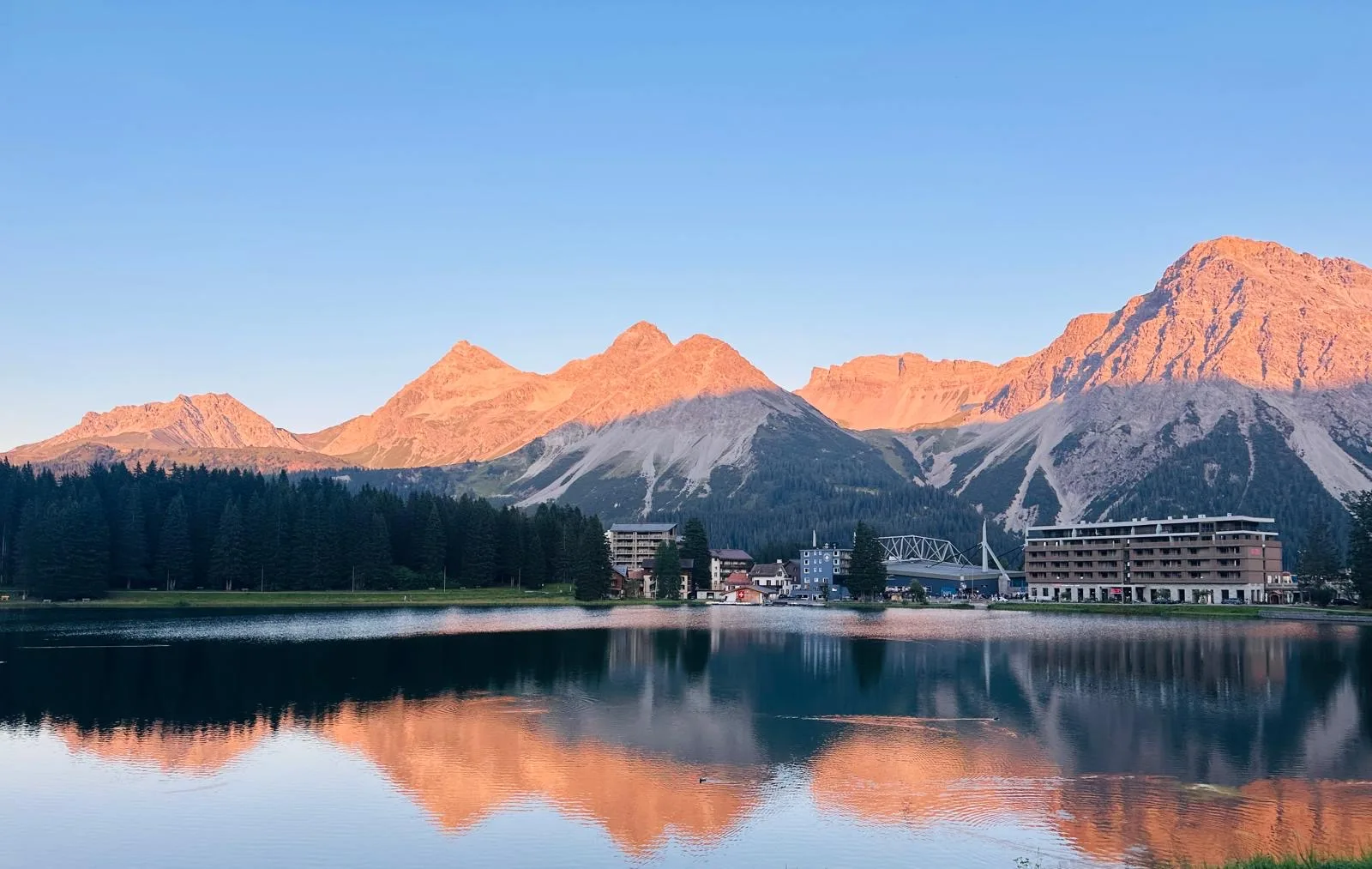
"So what trail did you have in mind?" I asked my partner as we arrived in Arosa.
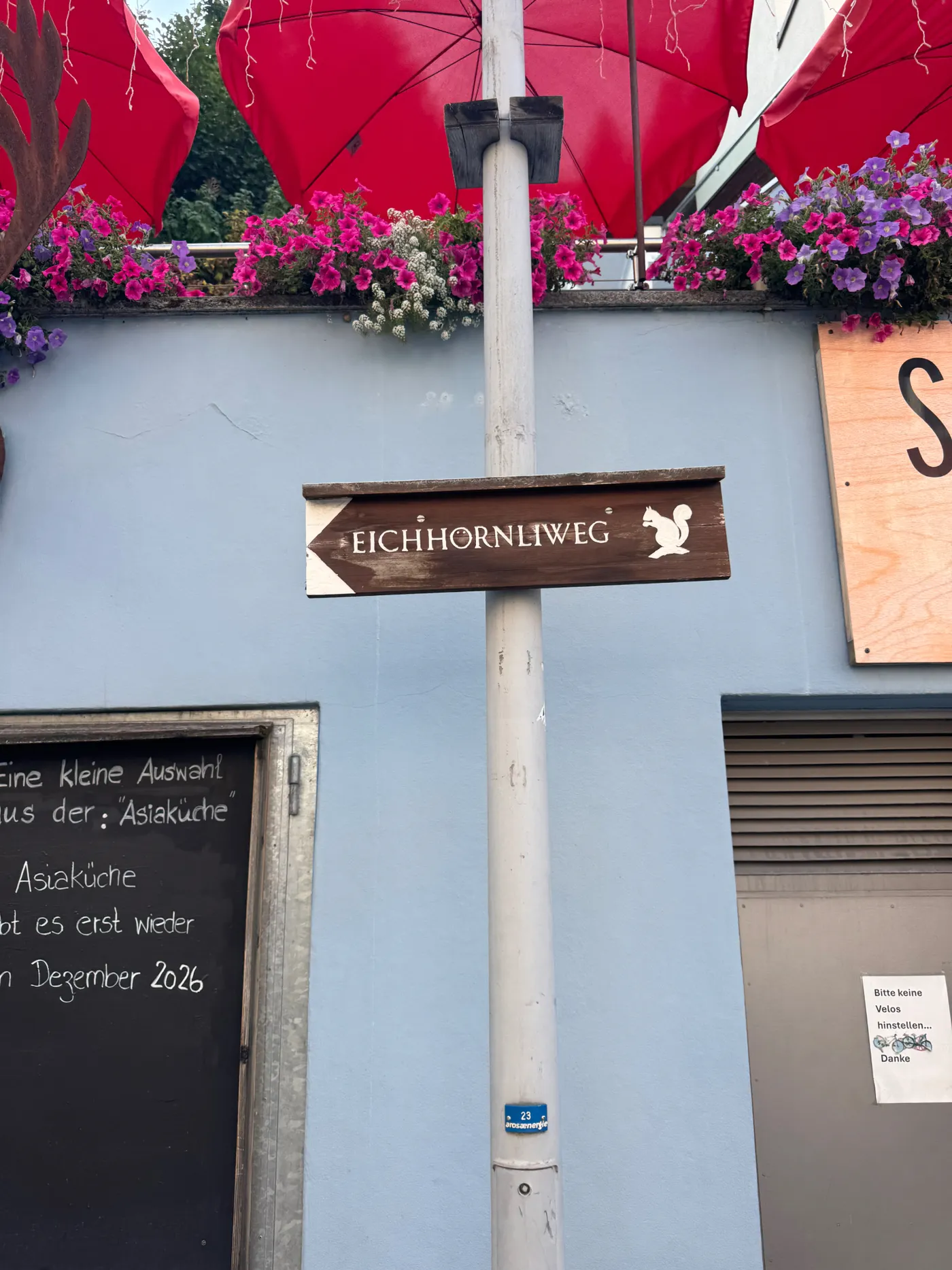
"The Squirrel Trail," she replied.
I smiled, thinking: at least it isn’t called Black Spider, or Stairway of Death, or Devil’s Castle. In the Alps, trail names tend toward the theatrical — the Spider, the Devil’s this, the Death that, all dreamed up by people who wanted you to know exactly how badly the mountain could go.
The Squirrel Trail is the antidote. It promises nothing more dramatic than a red squirrel taking a nut from your palm — and then delivers precisely that, with the whole Schanfigg valley falling away behind it.
Eye to eye
It takes a while to earn it. You crouch, you hold still, you wait. At one point I found myself eye to eye with one — a small, calculating stare while he decided whether I was trustworthy. From that moment on he closed the distance, coming to within a hand’s width before taking a nut. Not quite from the hand, but close enough to feel like a small act of trust. Mine, as it happened, was almost black rather than red — which brings me to a quirk worth knowing (below).
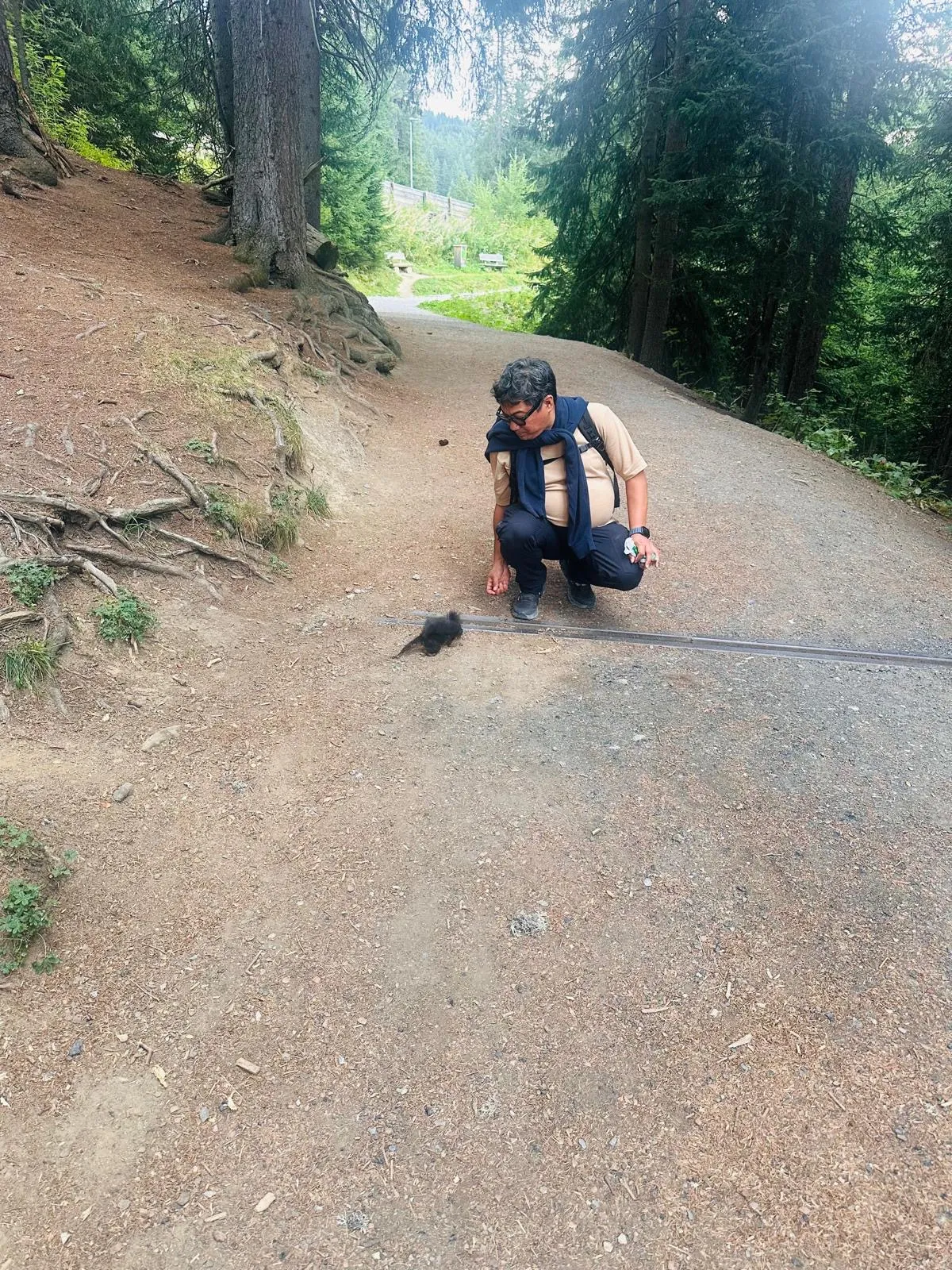
A note that matters for the animals: the nuts must be in-shell and unsalted. Salt is genuinely bad for squirrels, and the whole nuts in their shells are what they’re built for — cracking the shell is part of the point. Arosa leans into this deliberately, selling squirrel-safe nuts rather than letting visitors feed them just anything.
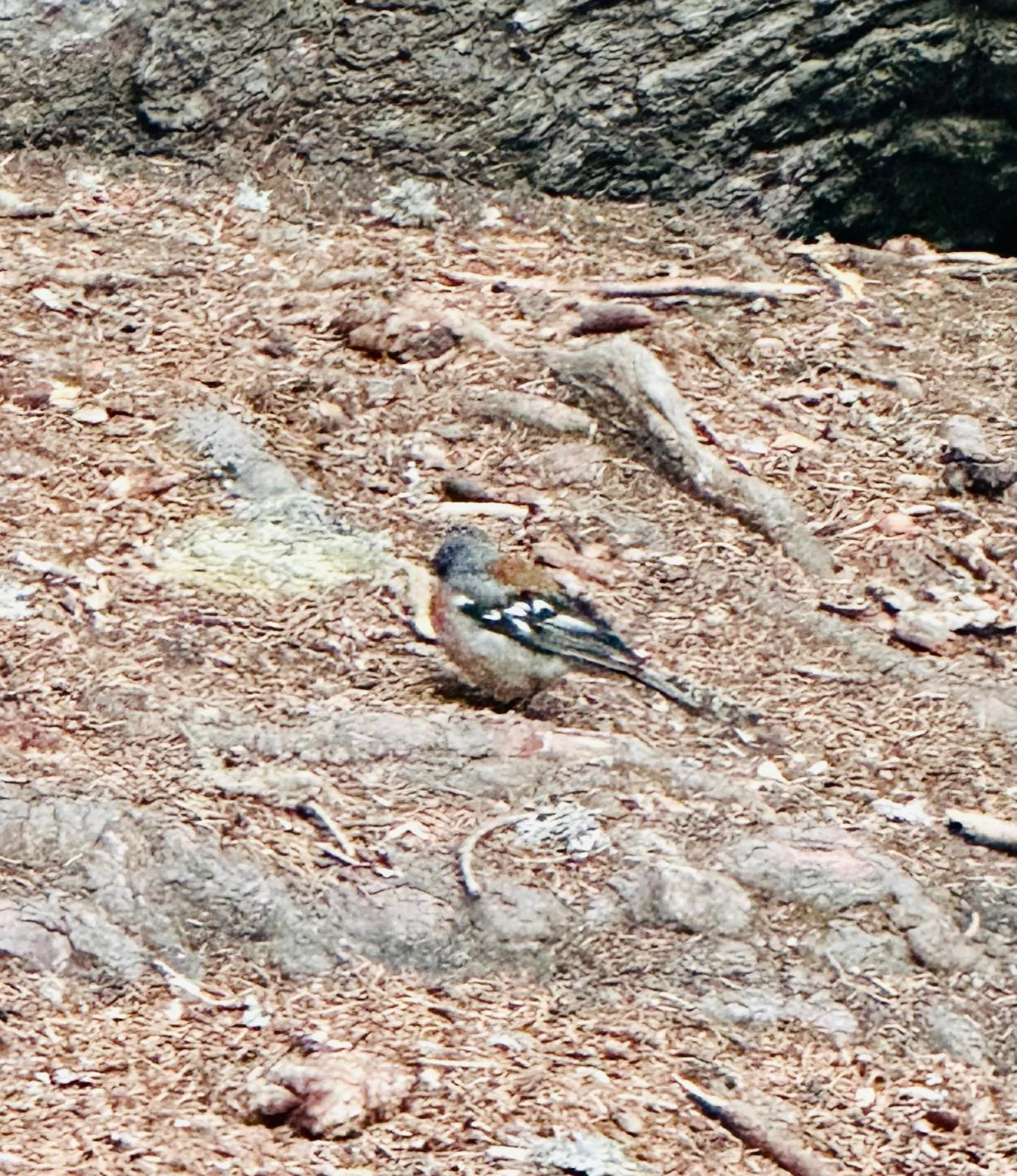
The birds have worked this out too. Drop a nut fragment and a chaffinch appears — and some of them are rounder than any wild bird has a right to be. One in particular looked like he’d been claiming a cut off this trail since the last Ice Age.
One lovely quirk to know: these “red” squirrels aren’t reliably red — as ours proved, sitting there in a coat closer to charcoal. Eurasian reds range from rust to brown to near-black, and come autumn many moult darker still, growing thick coats and long tufted ears for winter. The name is the species, not a description. The mountain keeps quietly relabelling things.
A summer of escape
We picked a good — or at least a telling — summer to come. 2026 has been brutal in the Swiss lowlands, with heatwave after heatwave pushing temperatures toward the high 30s. The result is what people are calling the “coolcation”: instead of heading down to the beaches of Italy or Spain, travellers are heading up. We did the same a few weeks earlier on a quiet weekend on the Jura plateau. Graubünden’s mountains have been busier than usual, a lot of it last-minute, weather-driven booking. Arosa, sheltered in its valley at 1,775 m, is exactly the refuge they’re after. The hotels felt fuller than the season would normally suggest, and you could see why.
Two lakes at the heart of town
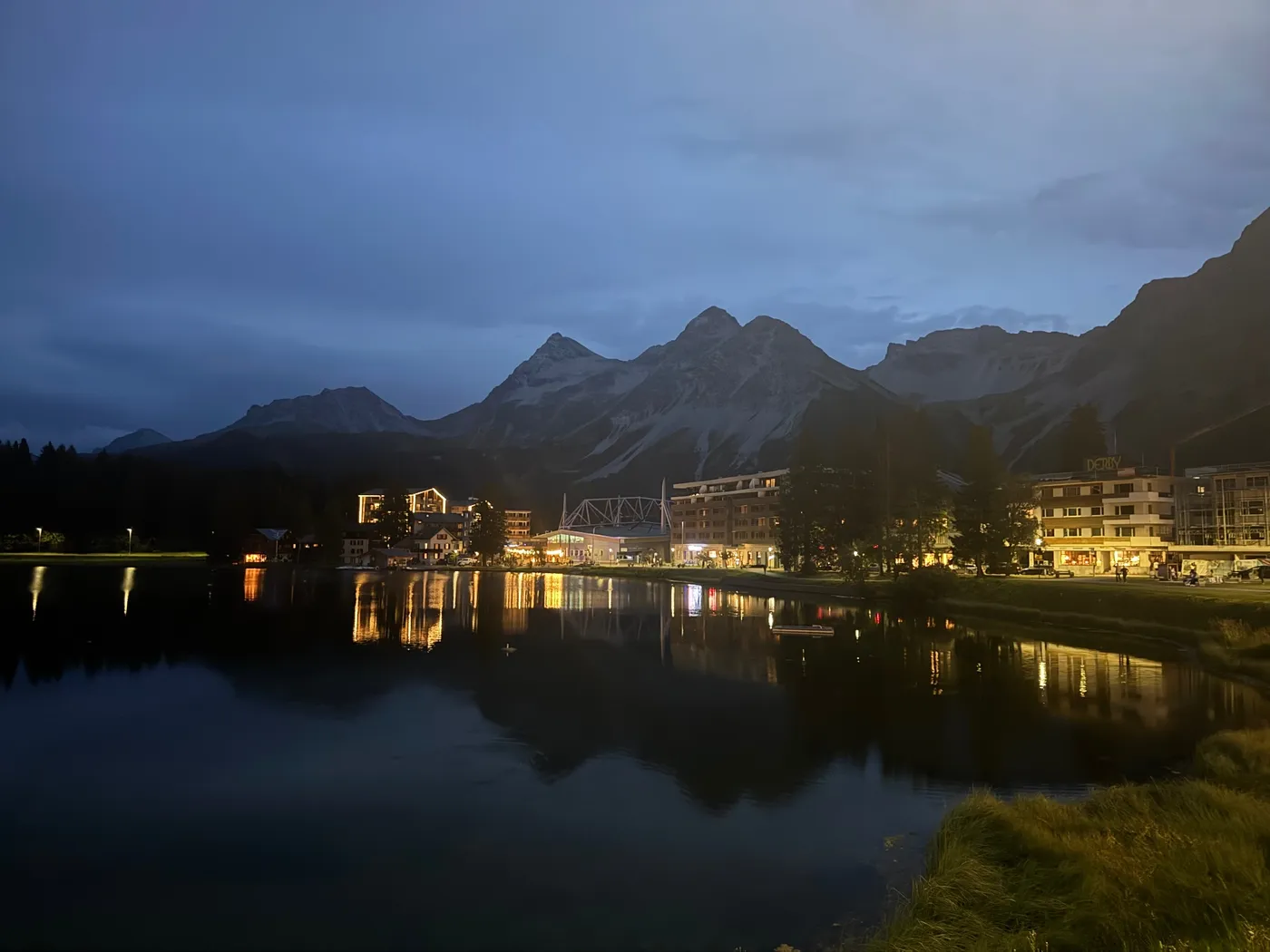
What I love about Arosa is that it’s built around two lakes, right in the centre.
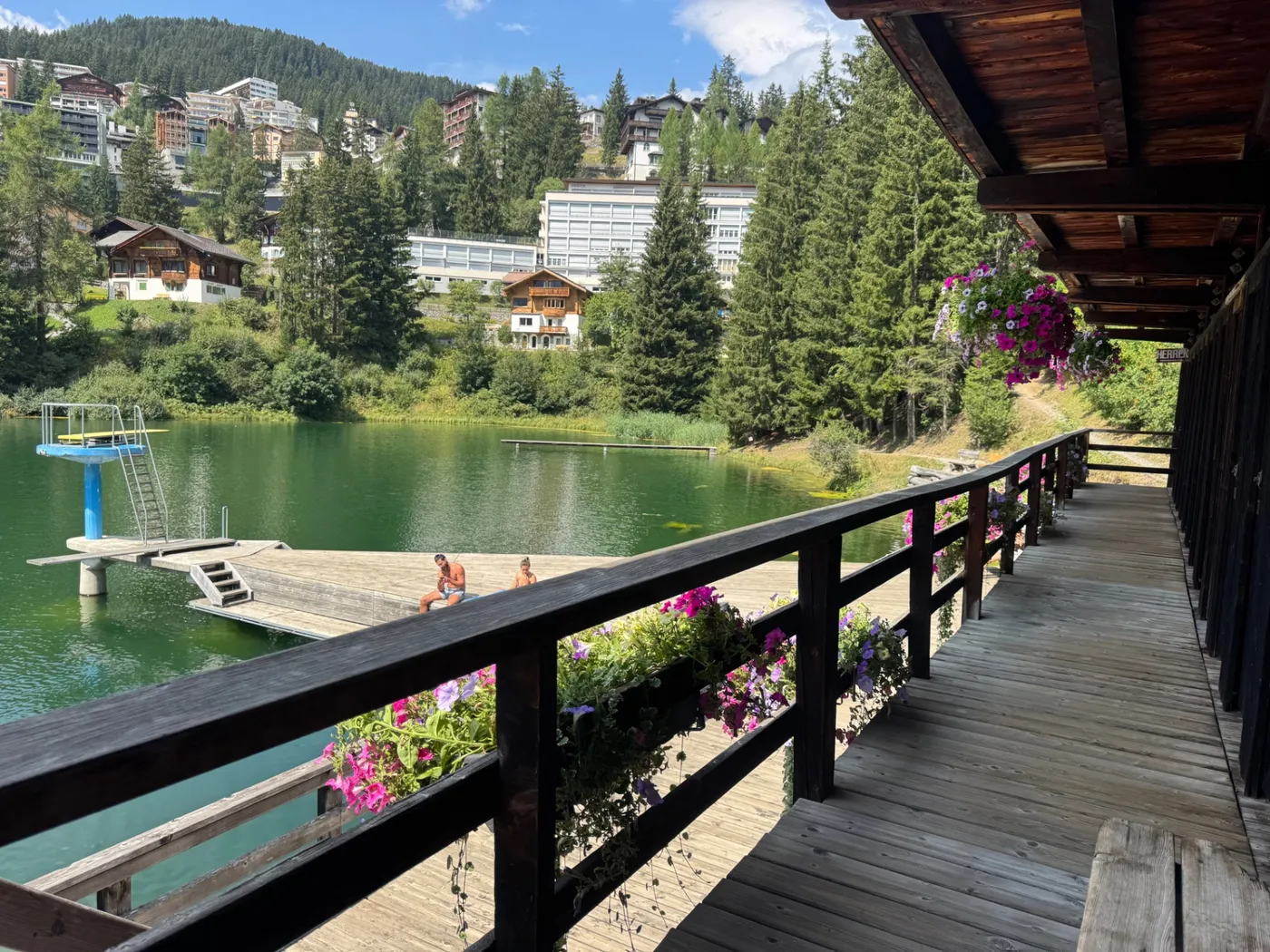
The Obersee is the active one — pedalos and rowing boats, and the nightly light show (more on that below). The Untersee is the swimming lake, and it was my partner’s highlight of the whole trip: calm, exceptionally clean, a lovely setting. The lido has an old blue diving tower, a wooden boardwalk trailing flower boxes of petunias, chalets and forest climbing the slope behind. The Arosa Card gets you in; the signs ask for it at the entrance, though on a hot afternoon we found the gate unmanned and the place simply full of swimmers.
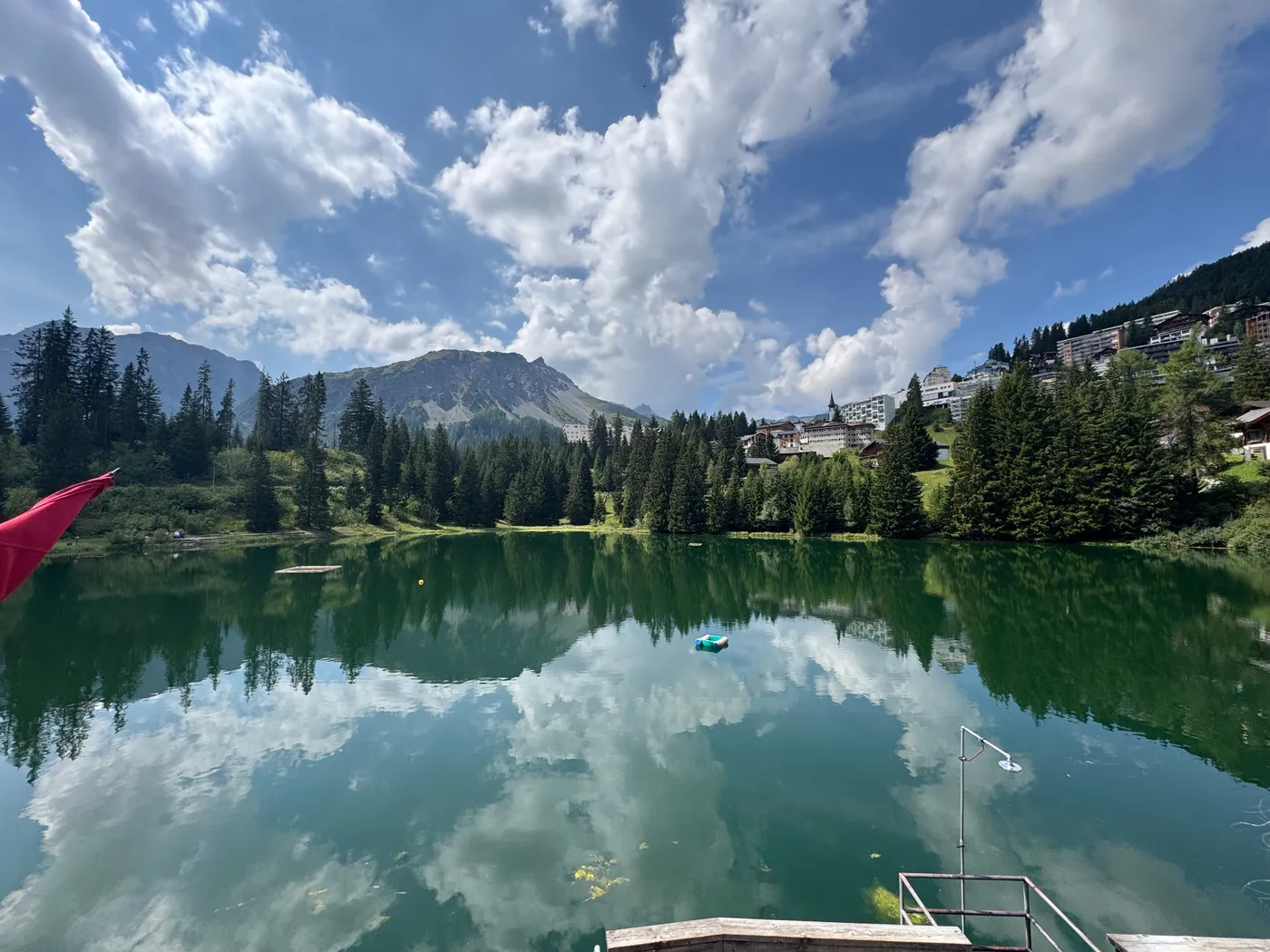
Stand on the boardwalk on a still morning and the lake turns to a perfect mirror — peaks and clouds doubled on the surface, a church spire off to one side. It’s the postcard, and it earns it.
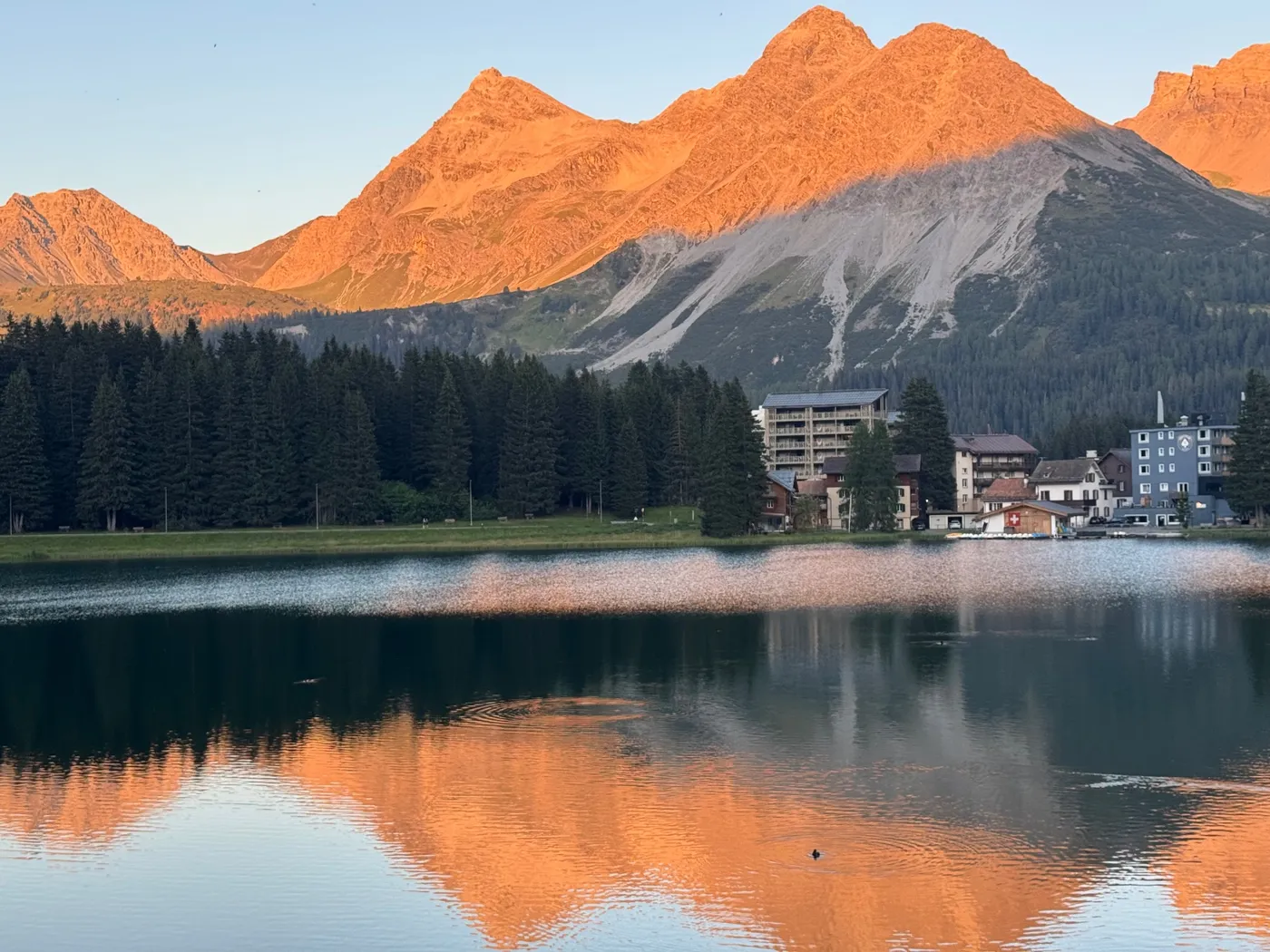
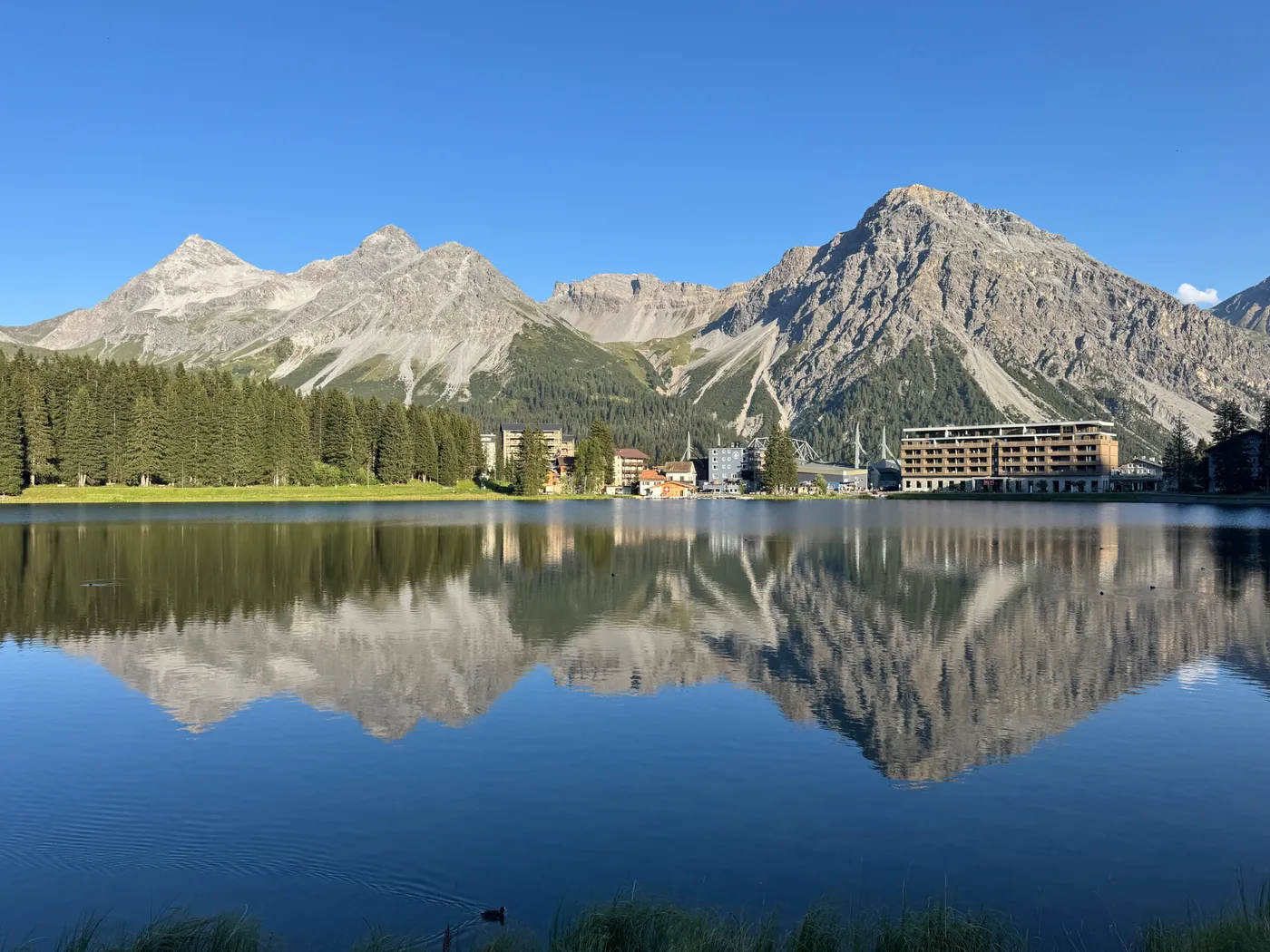
The town planning deserves credit for this. They’ve kept the wooded margins along both shores, the flower displays on every railing, the lake edges green and wild. And there’s a historic gravity to the place — those big balconied, sanatorium-style buildings on the hillside aren’t accidental. Arosa built its identity as a high-altitude health resort from the late 1870s onward, selling exactly the clean air and sunshine that today’s heat-fleeing visitors are chasing 150 years later. Even our hotel’s name, Sonnenhalde — “sunny slope” — nods to it.
Straight off the train, onto the mountain
The station is beautifully practical. It sits right beside the valley station of the Weisshorn cable car, so you step off the train and you’re essentially at the lift. From Zürich it’s around two and a half hours one way (via Chur, then the little Rhaetian Railway up the Schanfigg). That makes Arosa a doable — if committed — long day trip, though it’s better as an overnight, which is also when the Arosa Card kicks in.
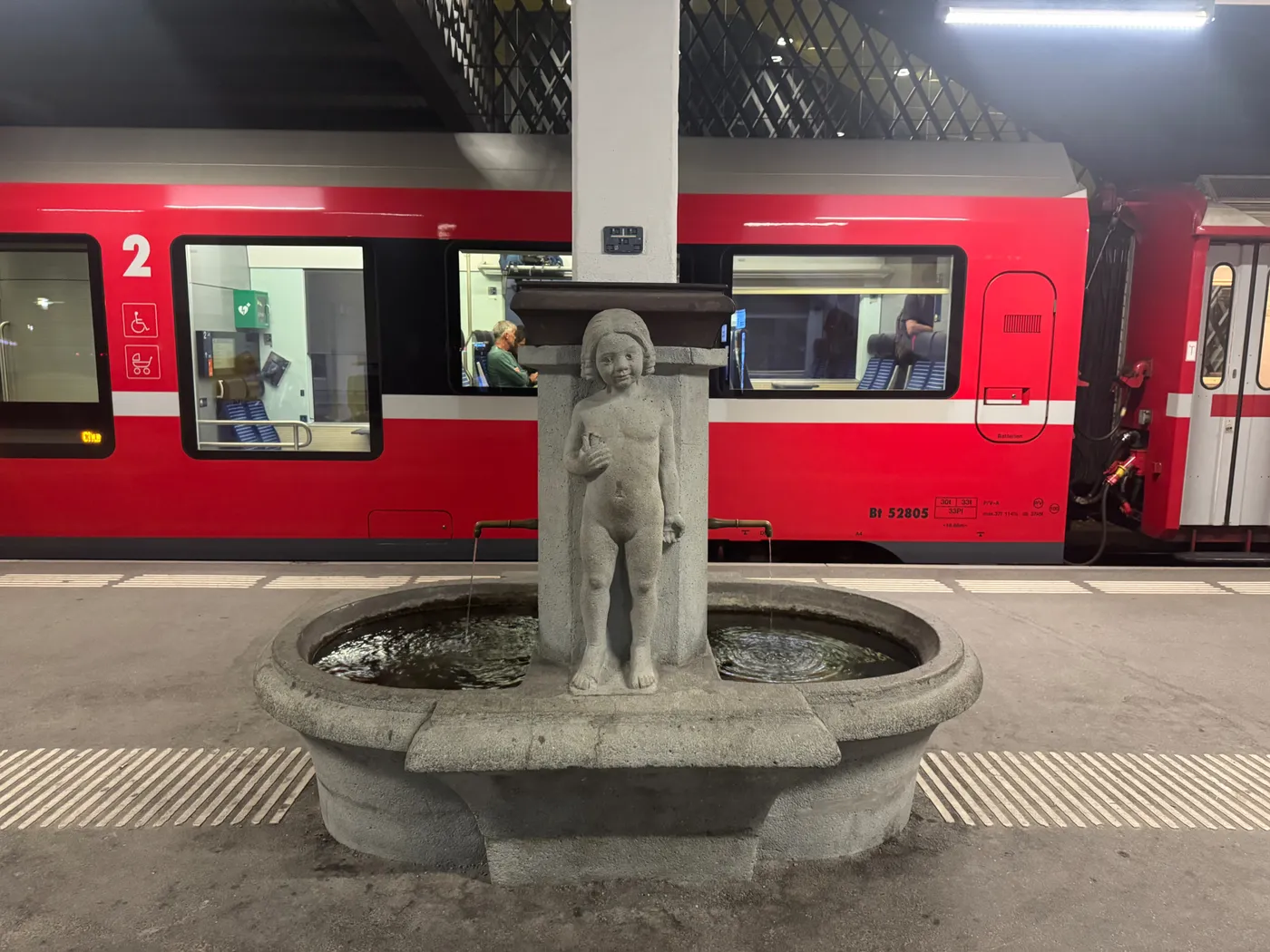
Don’t overlook the Arosa Card. One night in any hotel, apartment or campsite and it’s free, covering the local bus, the Weisshorn cable car (both sections), the Untersee lido and more, right through the summer season. Worth knowing: the free-cable-car benefit is a summer thing — in winter it works differently.
We drove up this time, and the views were glorious, but I’ll be honest: the driving was a bit challenging in parts, especially the narrow early stretches near Chur. It’s a joy ride for someone who loves driving — hundreds of hairpin bends climbing the valley — and once you’re up top the roads are perfect. But the hotel manager mentioned that at certain times in winter they require snow chains or four-wheel drive, which is standard reality for a high Alpine resort. If you’d rather skip the chains and the bends in the snow, the train up from Chur does all the climbing for you.
Dinner in a goods shed: Güterschuppen
Right beside the station is our favourite find: Güterschuppen. The name means “goods shed,” and that’s literally what it is — the old freight warehouse of the Rhaetian Railway (itself a UNESCO World Heritage line), converted around 2016 into a restaurant. They kept the industrial bones and softened them with an open central fireplace and modern furniture — old style with an eclectic touch. The terrace looks out over the Obersee, the forest and the mountains.
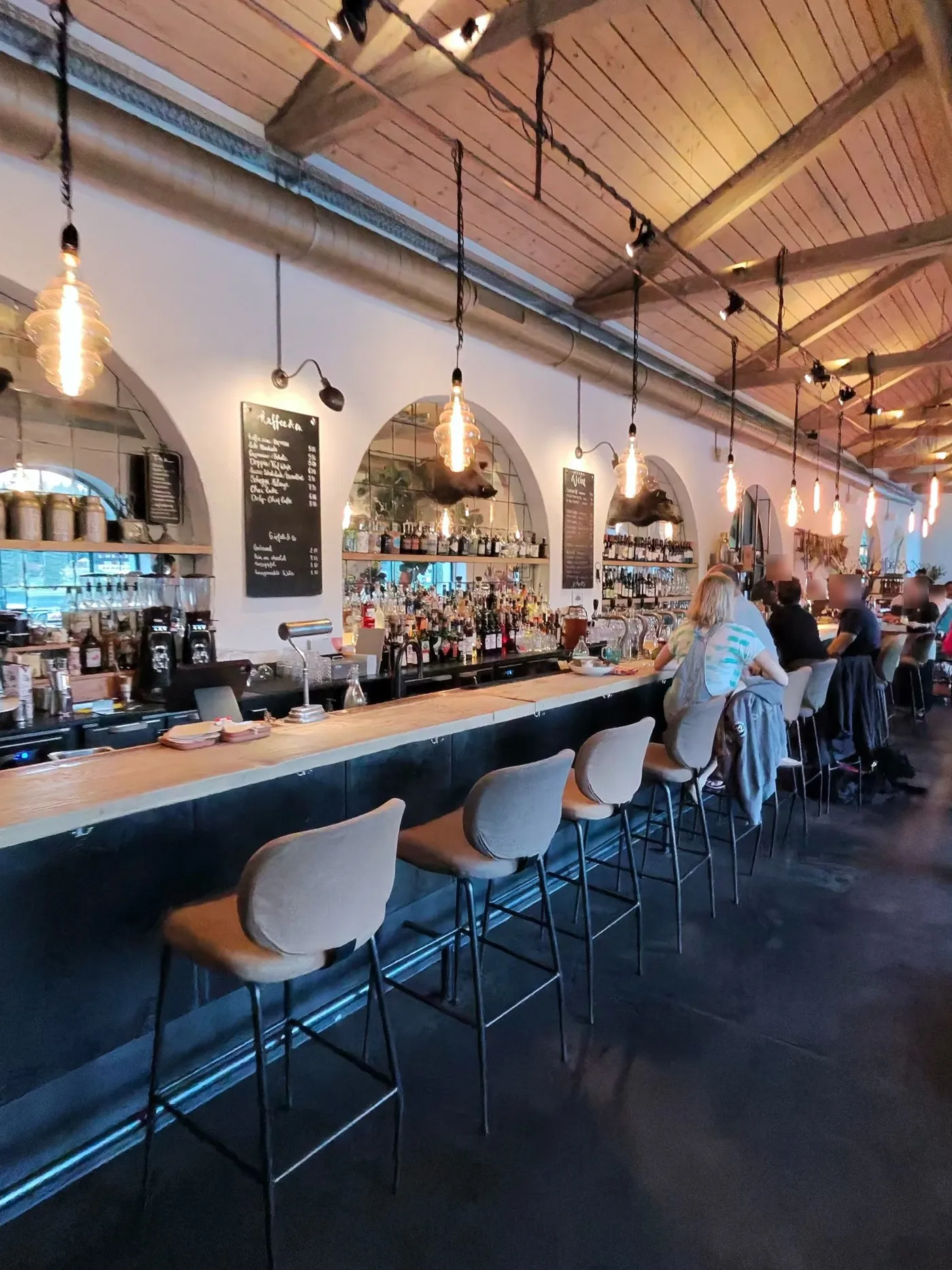
The food is modern Alpine leaning hard into local Graubünden produce — much of it off a Josper charcoal grill. Think Capuns (the classic Graubünden dish, here in its meatless version), a beef tartare dressed with peppery Belper Knolle cheese, hay-smoked chicken, lemon spaghetti made with pasta from Poschiavo. Everything came out healthy, colourful and beautifully presented — right down to the plates it was served on. The lemon curd was exquisite, and the rest of the menu lived up to it. Plenty of vegetarian and vegan options, clearly marked.
Bears and a lake that catches fire with light
Two more Arosa signatures we fit in.
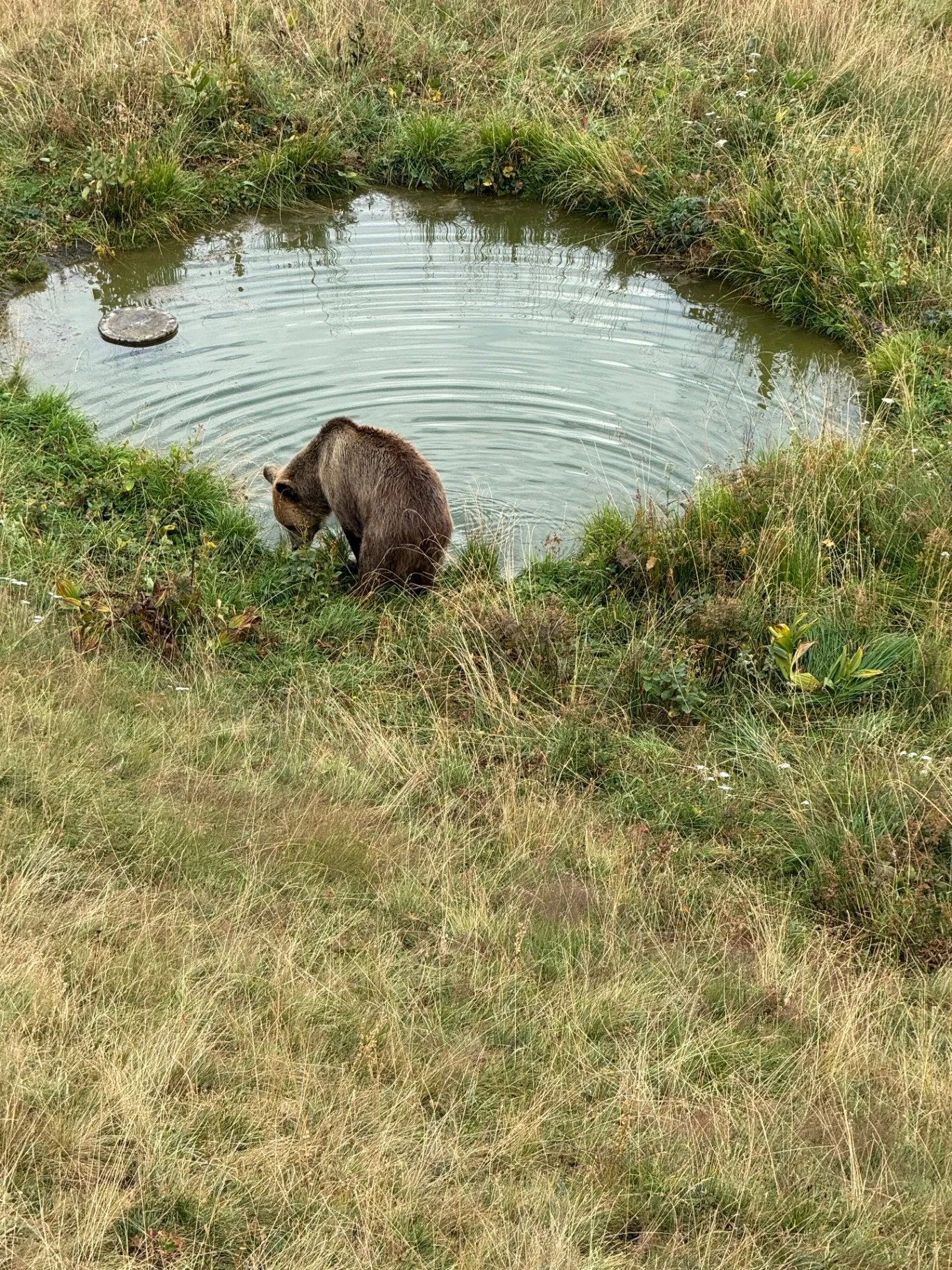
The Bear Sanctuary sits at the middle station of the Weisshorn cable car — Switzerland’s first, opened in 2018 and run by the animal-welfare group FOUR PAWS with the Arosa Bears Foundation. What gives the place its weight is that every bear here was rescued from mistreatment, and each one has its own story. The first resident, Napa, spent years as a circus bear in Serbia, kept in a small rusty cage; Amelia and Meimo came from a cramped pen beside an Albanian restaurant; Jambolina was pulled from a tiny cage in a Ukrainian garage, having spent her life performing tricks in a ballet skirt. The sanctuary gives them three hectares of mountain to relearn how to be bears — foraging, digging, cooling off in the pools — and the visitor centre tells each bear’s heartfelt story in full, with films of the rescues. From the elevated walkway you look down over the enclosure, close but never crowding them.
Reaching it is easy with the Arosa Card, which cuts admission to CHF 5 (day tickets are CHF 12 without it — full tickets and prices here).
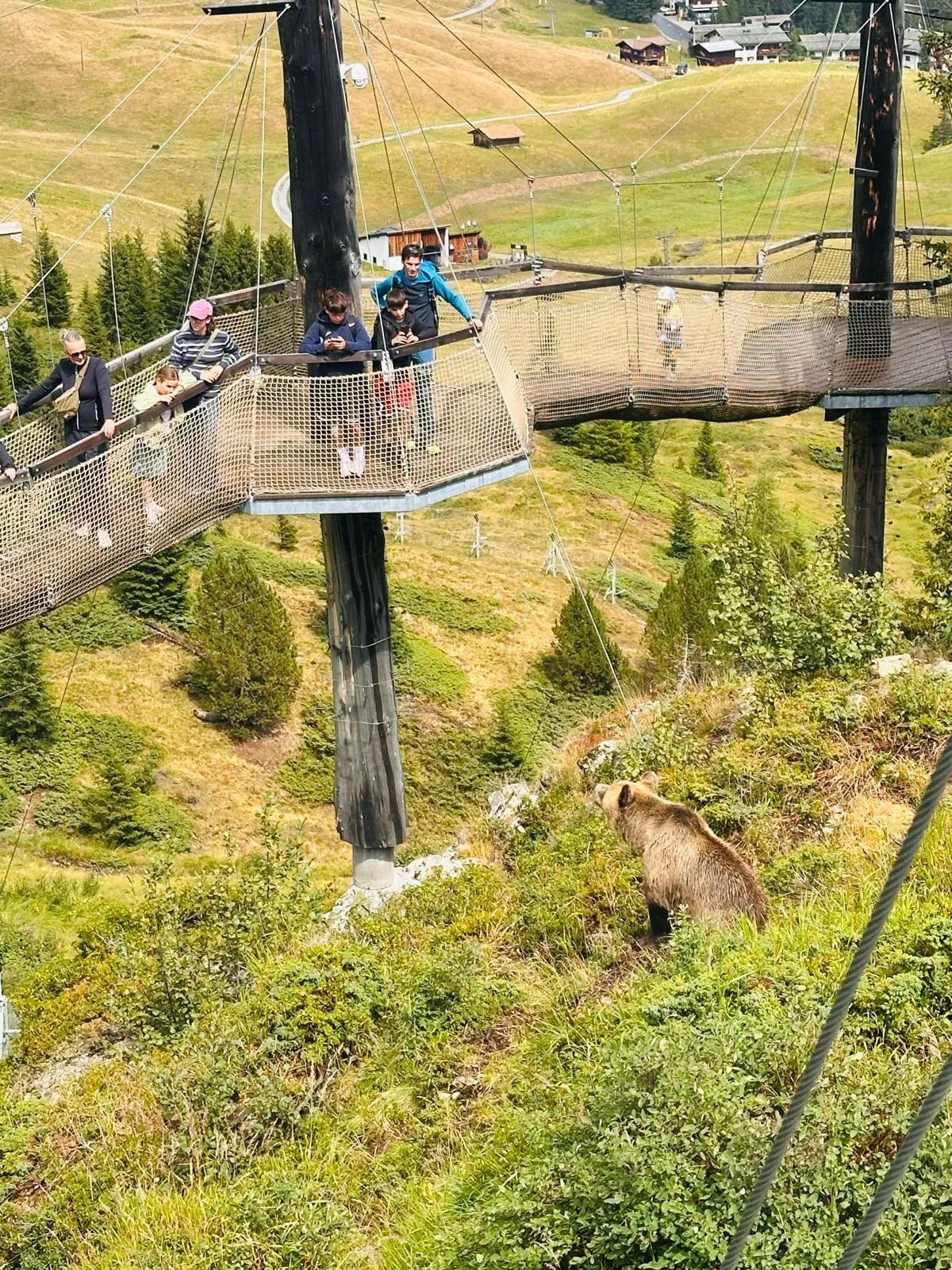
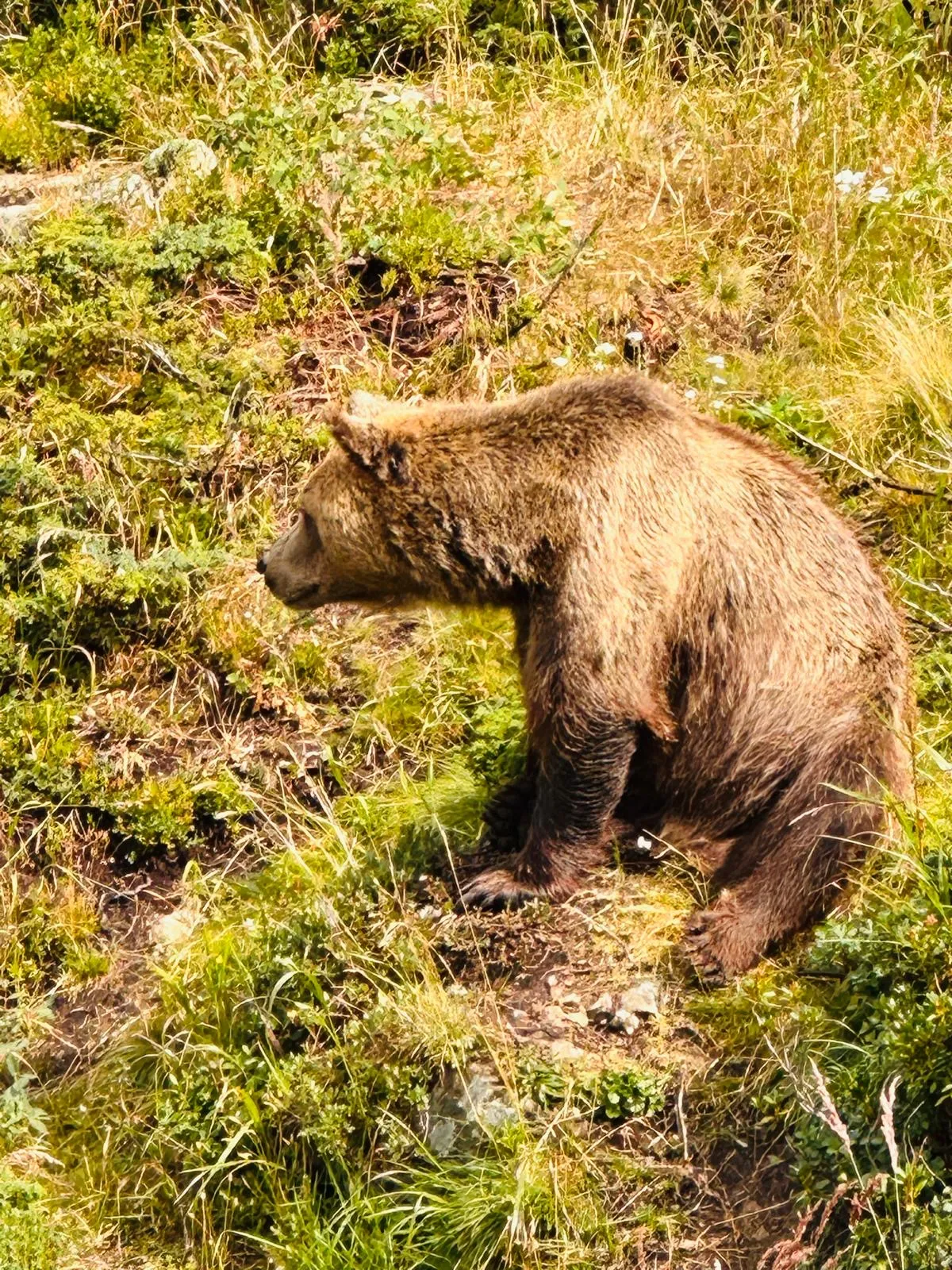
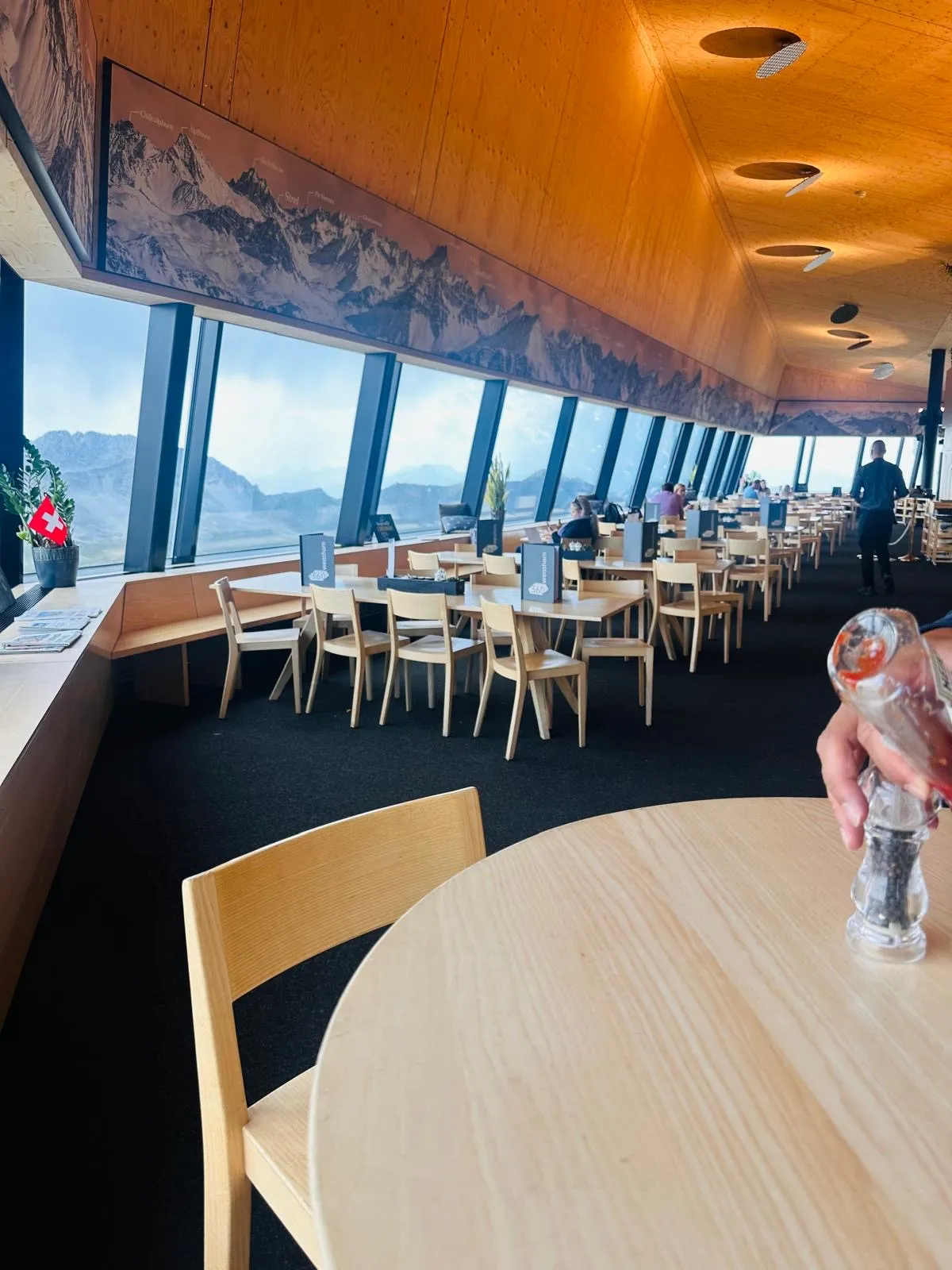
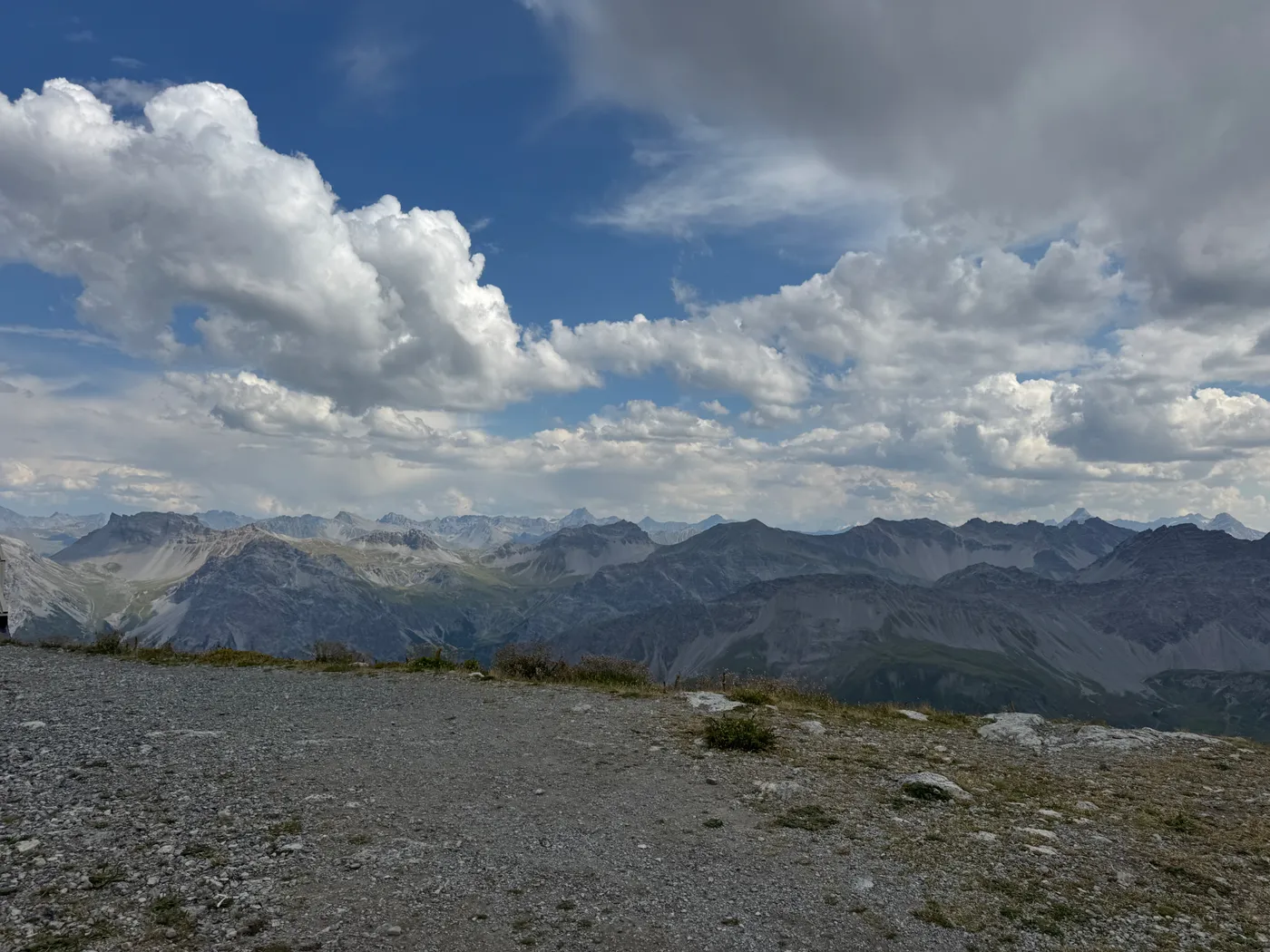
We rode the same lift on up to the 2,653m Weisshorn summit — a 360° panorama restaurant ringed with windows and labelled peak-photos, said to look out over 400 summits, with the lights of Chur twinkling far below after dark.
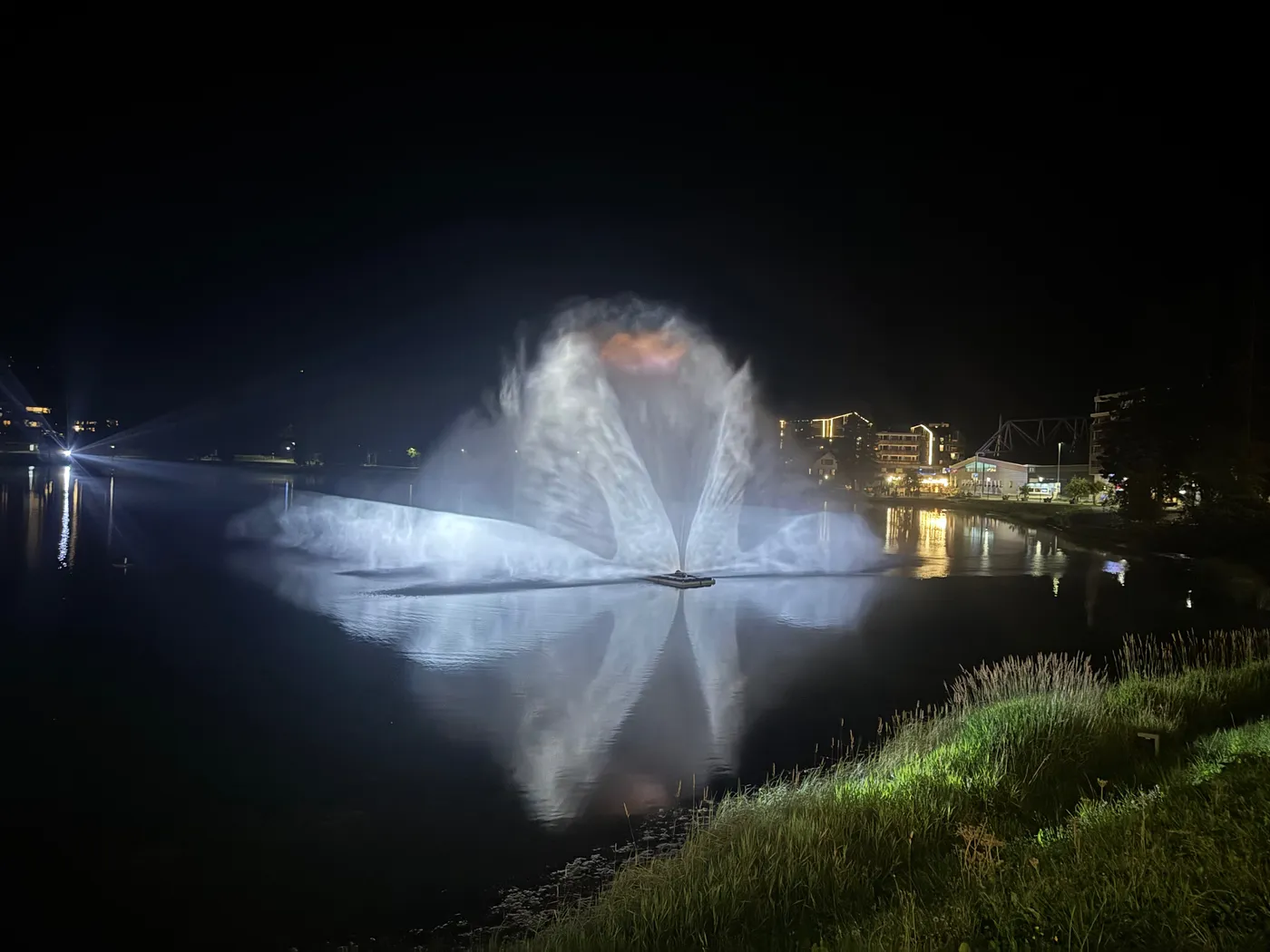
And at night, the Obersee comes alive with AquaLumina — a light, water and sound show projected not onto a screen but onto a “hydroscreen,” a curtain of millions of water droplets sprayed into the air, refracting laser light into something hologram-like. Worth stressing that this is a temporary, seasonal installation rather than a permanent fixture — it ran on select summer evenings (Tuesdays, Fridays and Saturdays at 9:45pm, about fifteen minutes, free), so check whether it’s on before you count on it. If you catch it, bring a jacket on a windy night — you’ll feel the spray.
Where we stayed: Hotel Sonnenhalde
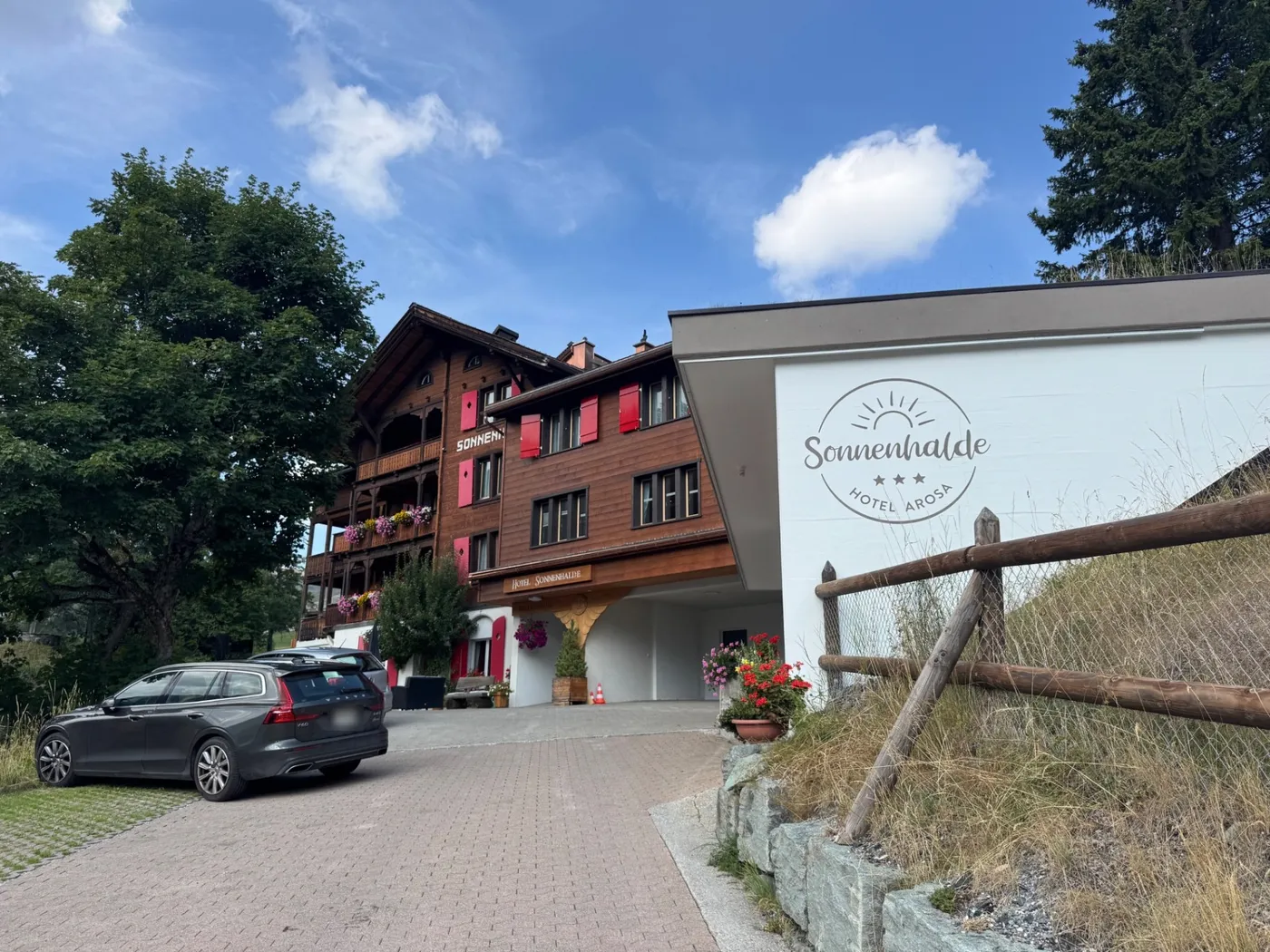
A cosy, family-owned 3-star on Sonnenbergstrasse, renovated only last year, and the family ownership shows in the personal touches. Comfortable rooms, breakfast that was genuinely perfect, blue-and-white colour-coded towels, and close to the lift areas for skiing. My recommendation: book direct with the hotel rather than through a booking platform. With a family-run house it usually means a better rate and a warmer welcome — and you’re dealing straight with the people who’ll greet you at the door.
We’ll be back for winter
If you are chasing more Swiss days out, we have a whole guide to day hikes near Geneva and a photo essay on the Rhine Falls at the other end of the country.
We’d happily return in winter for the skiing — the same station-and-cable-car convenience, but with snow. Between the two lakes, the bear sanctuary, the goods-shed dinner, the light on the water, and one squirrel who eventually decided I was trustworthy, it was just a perfect weekend getaway.
Practical info: Arosa in summer
- Where: Arosa, Graubünden, eastern Switzerland — 1,775 m above sea level.
- Getting there: Train to Chur, then the Rhätische Bahn Arosa Line — about an hour of switchbacks up the Schanfigg valley. The station is in the middle of town, a few minutes’ walk from both lakes.
- Getting around: Everything in this post is walkable. Local buses and the Weisshorn cable car leave from near the station.
- Arosa Card: Guests staying overnight get the Arosa Card, which covers local buses, mountain railways and cable cars, the Untersee lido and plenty more — ask your hotel at check-in.
- Best season: Late June to early October for the lakes, the Eichhörnliweg and the high trails; December to April for skiing.
- Eichhörnliweg: Free, roughly 30–45 minutes at a slow pace. It’s a flat, well-marked forest path — T1 on the SAC scale (hiking, no difficulty), ideal for families. Buy the proper squirrel food sold locally — don’t feed them anything else.
- Arosa Bärenland: Sanctuary for rescued brown bears, run by FOUR PAWS, reached on foot or by the Weisshorn cable car to the mid-station.
- AquaLumina: Seasonal water-and-light show on the Obersee on select summer evenings, free — check the official AquaLumina page for current dates.
- Where we stayed: Hotel Sonnenhalde, a family-run 3-star on Sonnenbergstrasse — book direct.